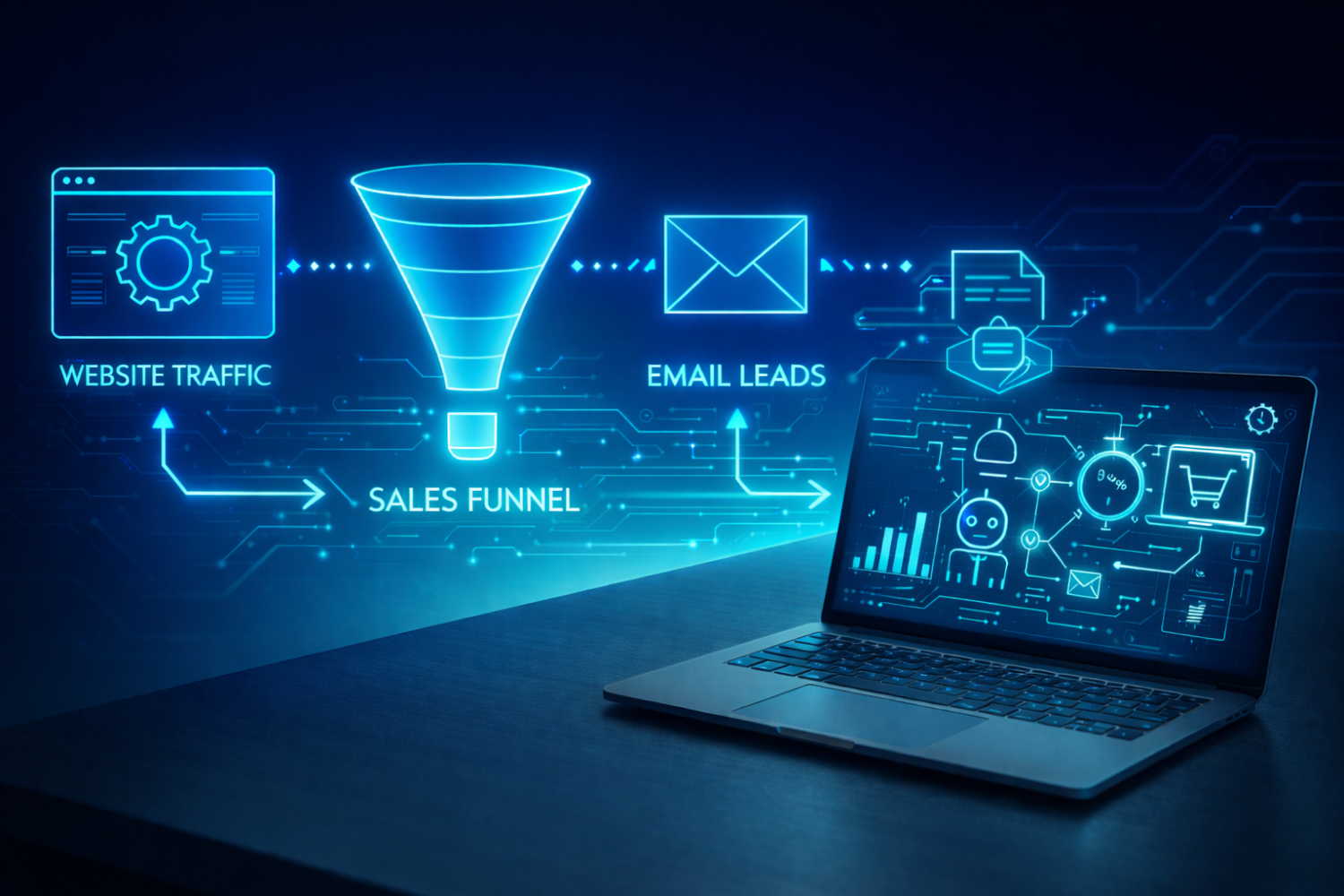
A sales funnel guides your potential customers from their first interaction with your brand all the way to making a purchase. Without one, you’re leaving money on the table because visitors who aren’t ready to buy right away often disappear forever.
Building a high-converting sales funnel means figuring out your target audience, mapping clear funnel stages, creating optimized landing pages, nurturing leads with email and retargeting, and constantly testing your results to boost conversions.
You don’t need fancy tools or a big marketing team to make a funnel work. The real trick is understanding how people move through each stage and giving them the right stuff at the right moment.
When you get it right, businesses with optimized funnels can increase conversions by up to 70%. That’s a big deal.
This guide walks you through every step so you can build a funnel that turns visitors into paying customers. You’ll see how to research your audience, craft offers that actually appeal to them, design pages that convert, and keep dialing in your results.
By setting up sales funnels you can create automated income systems that generate passive income.
Key Takeaways
- Dig deep into audience research and create an offer that solves a real problem for them
- Build your funnel with clear stages and guide people from awareness to purchase with the right content at each step
- Test your funnel often and use your data to spot weak points and improve conversion rates
Want to Build a Real Affiliate Business?
Stop building someone else’s business. Start building yours.
Learn more…
https://onlinebizprofits.com/real-affiliate-business
Understanding High-Converting Sales Funnels
A high-converting sales funnel turns website visitors into paying customers through a series of planned steps. The difference between average and high-converting funnels? It’s how well you match customer needs at each stage and knock down barriers to buying.
What Defines a High-Converting Sales Funnel
A high-converting sales funnel guides potential customers through the buying process and maximizes their chance of making a purchase. Your conversion rate shows how many people move from one stage to the next.
Key characteristics include:
- Clear value at every step
- Minimal friction in the buying process
- Content that matches buyer readiness
- Smart follow-up systems
- Data-driven tweaks and optimization
High conversion rates don’t just happen. You need to understand what your customers want at each point and deliver it fast. Your funnel should make buying easier than leaving.
Key Stages of the Funnel
Sales funnels usually have three main stages that match how people make decisions. Each stage nudges prospects closer to buying.
Top of Funnel (Awareness): You attract potential customers with content, ads, or search results. People discover your business and realize you might solve their problem.
Middle of Funnel (Consideration): Prospects decide if your solution fits their needs. You share details, case studies, and comparisons to build trust.
Bottom of Funnel (Decision): Buyers are ready to choose. You clear up last doubts and make buying simple.
Each funnel stage needs its own content and message. If you push for a sale too soon, people bail. Move too slow and someone else wins them over.
Customer Journey and Funnel Dynamics
The customer journey shows how people move through your funnel from first contact to purchase. When you understand this path, you can build smarter roadmaps and deliver the right message at the right moment.
Customers don’t always move in straight lines. Some jump in at different stages, skip steps, or loop back a few times before buying. A few decide fast, others need weeks.
Journey factors that affect conversion:
- How much they already know about your industry
- Budget and who needs to approve it
- How painful their current problem feels
- Trust in your brand or recommendations
- Other priorities and distractions
Use analytics to track how people actually move through your funnel. You’ll spot where folks get stuck and see which paths lead to the best results.
Audience Research and Crafting the Offer
Knowing who you want to reach and what they need is the foundation of any good funnel. Your offer should solve a real problem for a clearly defined group.
Conducting Target Audience Analysis
Start by digging up real data about the people most likely to buy from you. Google Analytics shows you demographics like age, location, and device usage. Facebook Audience Insights reveals interests and behaviors of your current followers.
Survey your customers or email list. Ask about their biggest headaches, what they tried before you, and why they picked your solution. Check competitor reviews on Trustpilot or G2 to see what people love or hate.
Browse social media comments and DMs for common questions. Join Facebook groups or Reddit threads where your audience hangs out. Read their discussions and pick up on their language and worries.
Key metrics to track:
- Age range and gender split
- Where they live
- Income level
- Job titles or industries
- Favorite social platforms
Identifying Buyer Personas and Pain Points
Create two or three detailed buyer personas that represent your ideal customers. Give each persona a name, job, and some specifics. List their goals, fears, and daily annoyances.
Write down the pain points each persona faces. A pain point is a real problem that keeps them up at night or drains their time and money. For example, “spending 10 hours a week on manual invoicing” is a lot more specific than just “needing better organization.”
Document what makes each persona start looking for a solution. Maybe they got a bad performance review, lost a client, or got hit with a big tax bill. These moments help you craft messages that hit home.
Persona template:
- Name and role: Sarah, Marketing Manager at B2B SaaS
- Main goal: Generate 50 qualified leads per month
- Top pain point: Low email open rates (under 15%)
- Trigger event: Boss threatened to cut marketing budget
Creating Irresistible Lead Magnets and Offers
Your lead magnet should deliver fast value and be easy to use. Checklists are great because people can use them right away without reading a ton.
Match your lead magnet to a real pain point. If your audience struggles with low social media engagement, offer a “15-Point Social Media Post Checklist” instead of a generic guide. The more specific, the better your conversion rate.
Your offer needs a clear unique selling point that sets you apart. Focus on one outcome and a timeframe. “Lose 10 pounds in 30 days” beats “Get healthier” every time.
High-converting lead magnet types:
- Templates (email sequences, spreadsheets, design files)
- Checklists (step-by-step task lists)
- Swipe files (proven examples to copy)
- Quick-start guides (get results in under an hour)
- Calculators or assessments (personalized results)
Try different offers and see what your audience likes best. Track conversion rates for each lead magnet and double down on the winners.
Structuring and Building the Sales Funnel
Building a funnel that works takes some planning. You need pages that guide visitors toward action and clear calls-to-action to move people forward.
The process means mapping out the customer journey, creating landing pages that convert, and putting CTAs in the right places.
Mapping Out Funnel Stages and Flow
First, identify the four main funnel stages: awareness, interest, decision, and action. Each stage needs its own content and touchpoints that match where people are in their journey.
For awareness, attract the right crowd with blog posts, social, or ads. At the interest stage, offer lead magnets like guides or webinars to capture contact info.
In the decision stage, share case studies, testimonials, and comparisons. The action stage is your checkout and confirmation page.
Map out how people move between these stages. Draw a simple diagram showing every page, email, and touchpoint. Spot where people might drop off and plan ways to keep them engaged.
Key flow elements to map:
- Entry points for new visitors
- Lead capture spots
- Nurture sequence touchpoints
- Content for decision-making
- Purchase pages
- Follow-up communications
Designing Effective Landing Pages
Your landing pages are the backbone of a high-converting sales funnel. Each page should focus on one goal and avoid distractions.
Keep your headlines clear and focused on benefits. Tell visitors what they get, not just what you offer. Use plain language that speaks to their problem.
Add visuals like product images, explainer videos, or customer photos. Cut out navigation menus and extra links that lead people away. Every part of the page should support your main conversion goal.
Put your most important info above the fold so visitors see it right away. Make it easy for them.
Essential landing page elements:
- Headline that addresses pain points
- Clear value proposition
- Trust signals (testimonials, security badges)
- Form or button for the next step
- Mobile-friendly design
Test different versions of your landing pages to boost your conversion rate. Change just one thing at a time—like headlines, images, or form length—to see what actually works.
Implementing Clear CTAs for Each Stage
Your call-to-action buttons and links should tell visitors exactly what happens next. Vague CTAs like “Submit” or “Click Here” just don’t convert as well as clear ones like “Get My Free Guide” or “Start Your Trial.”
Match your CTA language to the funnel stage. Early-stage CTAs work best when they’re low-commitment, like “Download Now” or “Learn More.”
Later in the funnel, you can ask for bigger commitments with CTAs like “Schedule a Demo” or “Buy Now.” Use contrasting colors that stand out from your page design.
Make buttons large enough to tap easily on mobile. Place your primary CTA above the fold and repeat it lower on longer pages—it helps.
CTA best practices:
- Use action verbs that create urgency
- Add benefit statements like “Start Saving Today”
- Test button colors, sizes, and placement
- Limit to one primary CTA per page
- Include secondary CTAs only when necessary
Position CTAs logically throughout your funnel flow. Each page should give visitors a clear next step that nudges them closer to buying.
Lead Nurturing and Conversion Optimization
Turning qualified leads into customers takes strategic nurturing that tackles their specific needs and concerns. Personalized content, social proof, and behavioral insights all build trust and move prospects through your funnel.
Segmenting Qualified Leads
You need to split your qualified leads into groups based on their behavior and characteristics. That way, you can send the right message to the right person at the right time.
Track how leads interact with your content. Look at which pages they visit, which emails they open, and what resources they download.
Use this data to create segments based on interest level and buying stage. Common segmentation criteria include:
- Industry or business type
- Company size or budget
- Engagement level with your content
- Specific pain points or challenges
- Position in the buying cycle
Your CRM system should tag leads based on their actions. Someone who downloads a pricing guide shows different intent than someone reading basic educational content.
Lead nurturing focuses on building relationships while guiding prospects naturally through each stage.
Nurturing with Personalized Content
Generic messages don’t convert. You have to tailor your communications to match where each lead is in their journey and what they’re struggling with.
Send educational content that answers specific questions your leads have asked or searched for. If someone downloaded a guide about email marketing, follow up with case studies showing real results from email campaigns.
Match the format to their preferences—some folks love videos, others want written guides. Personalization isn’t just about dropping in someone’s first name.
Reference their industry, company challenges, or past interactions with your brand. Set up automated email sequences that adjust based on how leads behave and engage.
Time your messages based on engagement signals. If a lead visits your pricing page three times in a week, that’s your cue to reach out with a personalized offer or demo invitation.
Utilizing Testimonials and Case Studies
Customer reviews and success stories knock down doubts in your sales process. They show prospects that real people have solved problems like theirs using your solution.
Place testimonials strategically throughout your funnel. Put them near your call-to-action buttons on landing pages, and include them in nurture emails when you’re discussing specific features or benefits.
Case studies hit hardest when they match your prospect’s situation. Build detailed stories that include:
- The customer’s initial challenge
- Why they chose your solution
- Specific results with numbers and metrics
- How long it took to see results
Video testimonials usually perform better because they come across as more authentic than written quotes. Keep them short—30 to 60 seconds is plenty—and focus on measurable outcomes.
Pull quotes from customer reviews that speak to common objections. If prospects worry about implementation time, highlight a testimonial from someone who got set up quickly.
Optimizing, Scaling, and Measuring Funnel Performance
Continuous improvement pushes funnel success forward through systematic testing, smart automation, and data-driven decisions. Optimizing conversion rates at each stage while maximizing customer lifetime value creates growth that really adds up over time.
Funnel Optimization Techniques
Funnel optimization is all about regular testing and analysis to spot weak points in your conversion path. Start by running A/B tests on landing pages, email subject lines, and call-to-action buttons to see what actually works for your audience.
Track your click-through rates at each funnel stage. If lots of people drop off on your pricing page, try testing different pricing presentations or add trust signals like testimonials.
Key metrics to monitor:
- Conversion rate at each stage
- Cost per acquisition
- Average order value
- Time to conversion
Use heat mapping tools to see where people click and scroll on your pages. This data shows you what grabs attention and what gets ignored.
Focus your optimization on high-impact areas first. Retargeting helps recover lost prospects by showing paid ads to folks who visited but didn’t convert.
These campaigns often get higher conversion rates because they target warm leads who already know your brand.
Maximizing Customer Lifetime Value
Customer lifetime value (CLV) measures the total revenue you can expect from a single customer over time. When you increase CLV, you can spend more to acquire customers and still stay profitable.
Email marketing platforms like Mailchimp help you nurture long-term customer relationships. Send personalized product recommendations, exclusive offers, and helpful content to keep people engaged.
Create upsell and cross-sell opportunities in your funnel. When someone buys a product, immediately offer complementary items or premium versions.
This strategy can boost sales without extra acquisition costs. Build a loyalty program that rewards repeat purchases—returning customers generate much higher CLV than one-time buyers.
Leveraging Tools for Automation and Tracking
Sales software like Salesforce automates repetitive tasks and tracks every customer interaction. You can set up automated email sequences that trigger based on specific behaviors, which saves time while keeping things personal.
Connect your tools to create a seamless data flow. Link your email platform to your CRM so customer info updates automatically across systems.
Essential automation features:
| Tool Type | Key Function | Benefit |
|---|---|---|
| CRM | Lead tracking | Organized customer data |
| Email Platform | Automated sequences | Consistent follow-up |
| Analytics | Performance monitoring | Data-driven decisions |
| Ad Platform | Campaign management | Efficient paid traffic |
Set up conversion tracking pixels on your thank-you pages to measure which traffic sources deliver the best results. This data shows you where to invest more budget to drive traffic effectively.
Schedule regular reporting to review your funnel metrics weekly or monthly. Compare performance over time to spot trends and adjust your strategy as needed.
Frequently Asked Questions
A successful sales funnel needs the right components, measurement strategies, and tools working together. When you understand these elements, you can build systems that guide potential customers from first contact to final purchase.
What are the key components of an effective sales funnel?
Every effective sales funnel has four main parts. You need traffic sources to bring the right people to your business.
You need lead magnets that capture contact info in exchange for value. Nurture sequences build trust over time, and conversion mechanisms turn interested prospects into paying customers.
Your traffic sources should focus on one or two channels where your ideal customers spend time. This might be search engines, social platforms, or paid ads.
Finding your winning traffic source means testing different approaches until you see what brings in qualified leads consistently.
Lead magnets need to solve specific problems your audience faces right now. PDF guides, email courses, and assessments work well when they deliver immediate value.
Your lead magnet should tackle one challenge completely, not skim over lots of topics. Nurture sequences keep prospects engaged after they enter your funnel.
Email sequences that educate, content that shows expertise, and touchpoints that address common objections all help. Every piece of content should move people closer to seeing how your solution fits their needs.
How can you measure and optimize conversion rates throughout the sales funnel stages?
Track specific metrics at each stage of your funnel. Measure traffic volume at the top, lead capture rates in the middle, and purchase conversion rates at the bottom.
Track cost per lead and customer lifetime value to understand your ROI. Calculate conversion rates by dividing the number of people who take an action by the total number who could have.
If 100 people visit your landing page and 20 download your lead magnet, your conversion rate is 20 percent. Monitor these numbers weekly to catch trends early.
Test one thing at a time to see what improves performance. Change your headline, check the results, then try a new image.
Testing too many things at once makes it impossible to know what made the difference. Small improvements at each stage add up fast.
If your funnel converts 10 percent at three stages, that’s 0.1 percent overall. Bumping each stage to 12 percent gets you to 0.17 percent overall—a 70 percent jump.
Focus on bottlenecks where people drop off. If your email open rates are solid but click-throughs are weak, your email content probably needs work.
If people click but don’t buy, look at your offer or checkout process. That’s usually where the friction is.
What are some proven strategies for nurturing leads at each stage of the sales funnel?
At the top of your funnel, share educational content that answers basic questions your audience has. Blog posts, short videos, and social content work well here.
Focus on building awareness of problems, not pushing solutions. Middle-funnel content should compare different approaches to solving the problem.
Case studies, webinars, and deep-dive guides help prospects weigh their options. Show how different solutions work without immediately pitching your product.
Bottom-funnel nurturing handles final objections and proves your value. Share testimonials from customers in similar situations.
Offer detailed product demos or free trials. Make it easy for prospects to see exactly what they get when they buy.
Email sequences should deliver value at every stage. Send a welcome series that introduces your approach, then follow up with content that builds on what they’ve already learned.
Include stories about customer transformations that match where your prospect is in their journey. Use segmentation to personalize nurture content based on prospect behavior.
Someone who downloads a beginner guide needs different follow-up than someone who watches an advanced webinar. Tailor your messages to match their interests and knowledge level.
How do design and user experience impact the performance of a sales funnel?
Every extra click or form field chips away at your conversion rate. You want your funnel to remove friction at every step.
Make buttons obvious. Keep forms short and next steps ridiculously clear.
People shouldn’t have to guess what to do next. If they’re hesitating, something’s off.
Page load speed absolutely matters. Pages that load in a second convert way better than ones that drag on for three.
Compress your images, trim the code, and pick hosting that doesn’t let you down. Fast pages keep people moving forward.
Mobile experience isn’t optional anymore, since so many folks browse on their phones. Your pages have to look good and actually work on small screens.
Test every bit of your funnel on mobile before you go live. It’s amazing how often something breaks or just feels clunky.
Visual hierarchy? That’s your secret weapon for guiding attention. Use size, color, and placement to pull eyes to your headline first, then the supporting points, then your call to action.
Give your key elements some breathing room with white space. It helps them pop.
Trust signals calm people’s nerves about taking action. Security badges belong on checkout pages, and client logos look great on landing pages.
Don’t forget clear contact info and strong guarantees. These little things make buying from you feel safe.
Can you provide examples of successful sales funnel designs in different industries?
Software companies love free trial funnels. They let prospects actually use the product before buying.
Traffic comes from content marketing and paid ads. Visitors sign up for a free trial with barely any info required.
During the trial, the company sends automated emails that highlight key features and real-life use cases. As the trial wraps up, they toss in discounts or bonuses to nudge trial users toward paying.
Service businesses usually build funnels around discovery calls. They’ll offer lead magnets—think assessments or guides—to get things started.
When someone downloads a resource, they get email sequences that show off expertise. The emails weave in case studies and testimonials from similar clients.
Qualified prospects book calls through simple scheduling links. The call itself focuses on fit and next steps, not just basic info.
E-commerce brands set up product education funnels for pricier items. Social media ads send people to content about solving specific problems.
Landing pages offer buying guides or comparison tools in exchange for an email. Follow-up emails share more product info, customer reviews, and limited-time offers.
The funnel handles common questions before prospects even hit the product page.
Coaching businesses usually start with free workshops or webinars to build authority. They promote these events through organic social and email lists.
Attendees actually get value during the event. At the end, the coach pitches a paid program as the next logical step.
Follow-up emails for non-buyers keep offering value while gently addressing objections. Sometimes, people just need a little more time or reassurance.
What tools and software are recommended for creating and managing a high-converting sales funnel?
Email marketing platforms help you capture leads and guide them through nurture sequences. Mailchimp’s great for beginners—it has a free tier and a pretty straightforward interface.
ConvertKit feels more tailored for content creators, especially if you want to organize your audience with tags instead of just lists. If you need more advanced automation or your funnel’s starting to get complicated, ActiveCampaign can really shine.
Pick your tool based on how big your list is and what kind of automation you actually need. No sense overcomplicating things if you don’t have to.
Landing page builders let you create conversion-focuse






Leave a Reply